Extracted images: Cisterns (Small-Scale GI)
Printed revision: March 2021.
Back to source | Original PDF | Image metadata
Original Mistral crops are preserved byte for byte. A crop can be a figure, table, equation, or other visual; no visual content is inferred as a numerical rule. Record and table associations use the same PDF page unless a direct image placeholder is identified. Nearby OCR excerpts are context, not verified captions.
PDF page 1, image 1
Mistral ID: img-0.jpeg. Extraction bundle(s): 2023_BMP_9_1_Cisterns. Original page | Image file
Tables on the same PDF page: Table 1
Surrounding OCR excerpt:
# 9.1 CISTERNS

[OCR image]

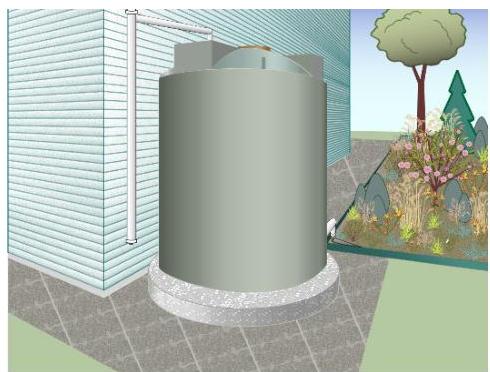
Cisterns are stormwater facilities that temporarily store stormwater runoff from clean rooftops, which is subsequently reused for non-potable uses, such as toilet flushing and vehicle washing. Cisterns can either be indoors or outdoors and above, at or even below grade. The reuse of collected stormwater runoff reduces the volume of stormwater runoff transported to downstream facilities. Take note that
PDF page 2, image 1
Mistral ID: img-1.jpeg. Extraction bundle(s): 2023_BMP_9_1_Cisterns. Original page | Image file
Surrounding OCR excerpt:
[OCR image]

[OCR image]

[OCR image]
PDF page 2, image 2
Mistral ID: img-2.jpeg. Extraction bundle(s): 2023_BMP_9_1_Cisterns. Original page | Image file
Surrounding OCR excerpt:
[OCR image]

[OCR image]

[OCR image]
PDF page 2, image 3
Mistral ID: img-3.jpeg. Extraction bundle(s): 2023_BMP_9_1_Cisterns. Original page | Image file
Surrounding OCR excerpt:
[OCR image]

[OCR image]

[OCR image]
PDF page 3, image 1
Mistral ID: img-4.jpeg. Extraction bundle(s): 2023_BMP_9_1_Cisterns. Original page | Image file

Surrounding OCR excerpt:
# Applications

[OCR image]

Pursuant to N.J.A.C. 7:8-5.2(a)(2), the minimum design and performance standards for groundwater recharge, stormwater runoff quality and stormwater runoff quantity at N.J.A.C. 7:8- 5.4, 5.5 and 5.6 shall be met by incorporating green infrastructure in accordance with N.J.A.C. 7:8-5.3.

Cisterns may be designed to reduce the volume of stormwater discharged to downstream facilities and/or to reduce peak
PDF page 5, image 1
Mistral ID: img-5.jpeg. Extraction bundle(s): 2023_BMP_9_1_Cisterns. Original page | Image file
Surrounding OCR excerpt:
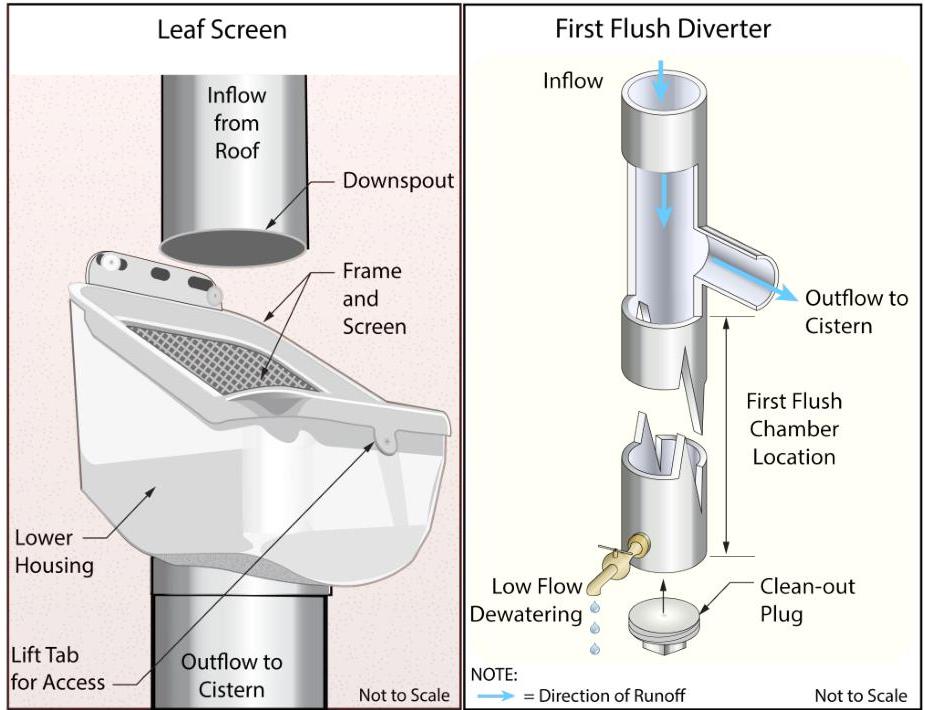
n the left. Leaf screens must be maintained regularly to prevent clogging, which could prevent flow into the cistern. Additionally, poorly maintained leaf screens may lead to the growth of harmful bacteria.

[OCR image]
Examples of Cistern Pretreatment Options

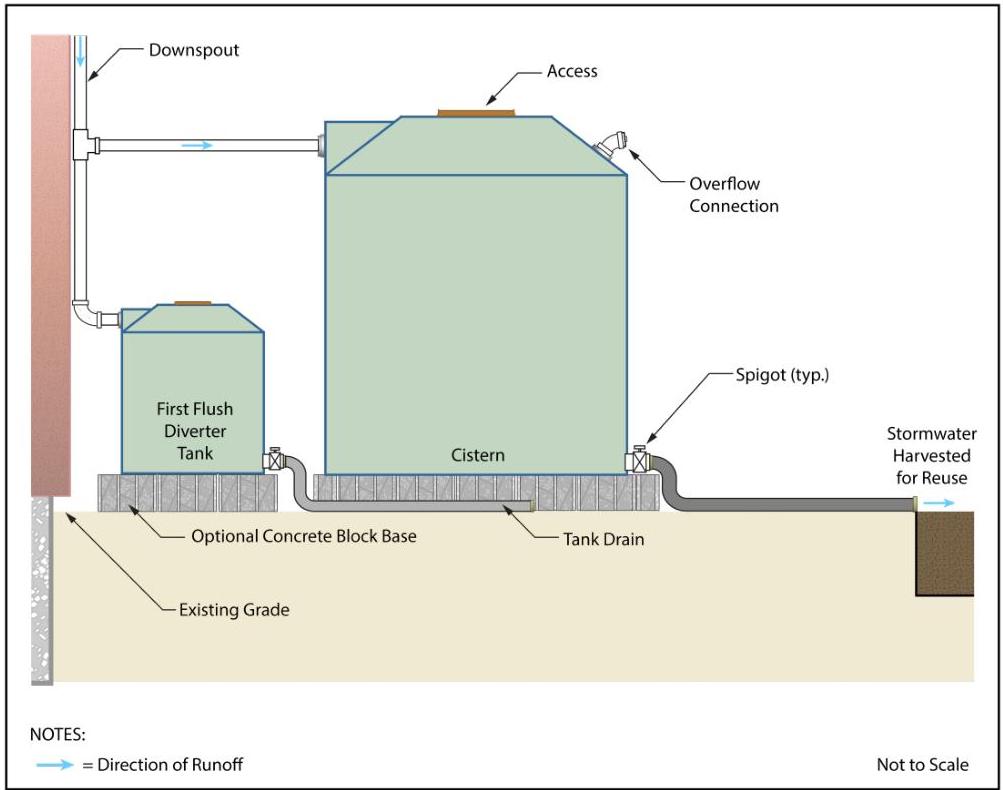
☐ First Flush Diverters are devices that direct stormwater generated at the start of a precipitation event away from a cistern. This first flush of runoff tends to wash smaller contaminants that have built up on the rooftop surface into the cistern; these contaminants may include dust, pollen, other airborne pollutants and animal feces. First flush diverters may
PDF page 6, image 1
Mistral ID: img-6.jpeg. Extraction bundle(s): 2023_BMP_9_1_Cisterns. Original page | Image file
Surrounding OCR excerpt:
[OCR image]
Surface Cistern with First Flush Diverter Tank

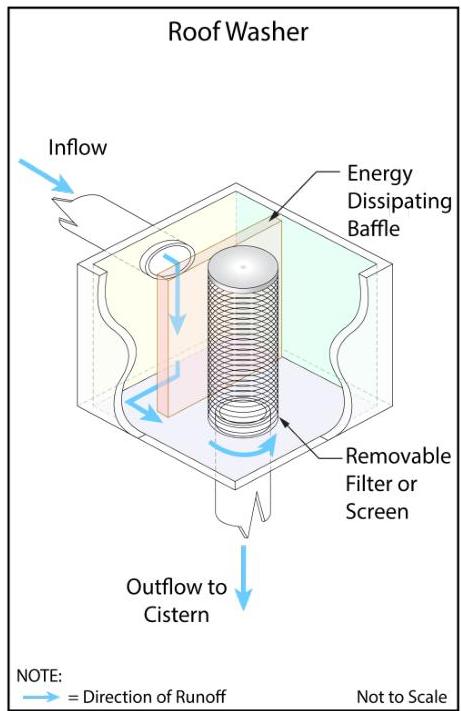
☐ Roof Washers are devices placed just before the inflow into the cistern. Roof washers consist of a storage device that allows for some settling, as well as fine screens over the outlet; these devices are intended to treat the fine particulates in runoff. Roof washers must be maintained on a regular basis to prevent clogging. An illustration of one type o
PDF page 6, image 2
Mistral ID: img-7.jpeg. Extraction bundle(s): 2023_BMP_9_1_Cisterns. Original page | Image file
Surrounding OCR excerpt:
utlet; these devices are intended to treat the fine particulates in runoff. Roof washers must be maintained on a regular basis to prevent clogging. An illustration of one type of roof washer is shown below.

[OCR image]
PDF page 7, image 1
Mistral ID: img-8.jpeg. Extraction bundle(s): 2023_BMP_9_1_Cisterns. Original page | Image file
Surrounding OCR excerpt:
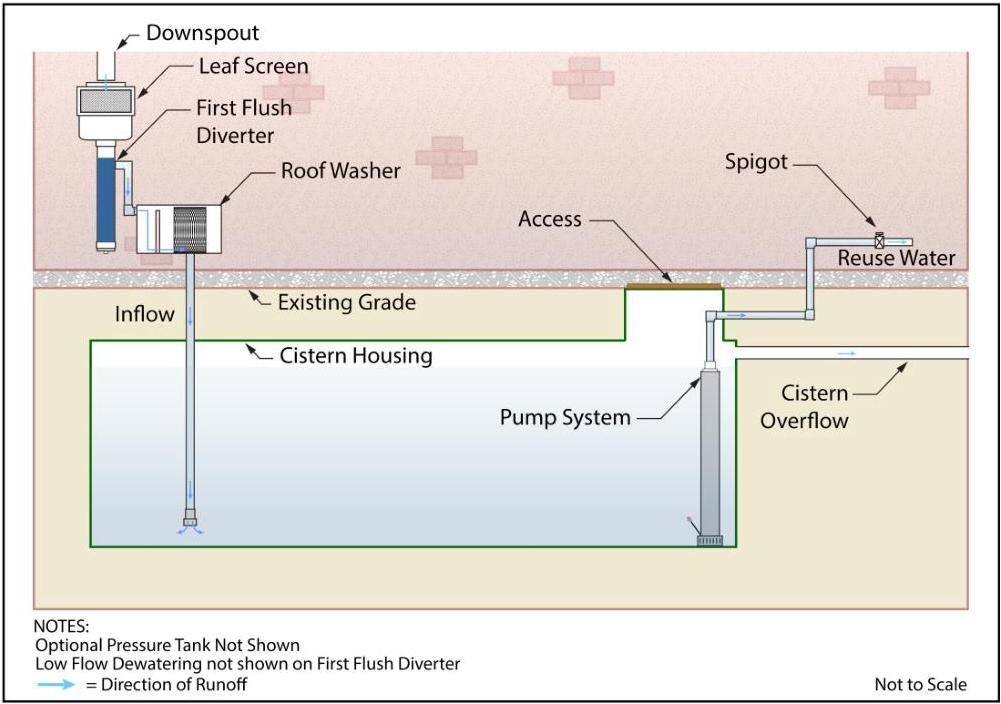
thstand all anticipated traffic and other design loads. The illustration on the following page shows one possible configuration and flow path of a subsurface cistern and is not intended to limit the design.

[OCR image]

# Safety

- Cisterns must be designed to safely convey overflows to downstream drainage systems. The design of the overflow structure must be sufficient to provide safe, stable discharge of stormwater in the event of an overflow. Safe and stable discharge minimizes the possibility of adverse impacts, including erosion and flooding (even in areas outside of the flood hazard area) such as nuisance floodi
PDF page 10, image 1
Mistral ID: img-9.jpeg. Extraction bundle(s): 2023_BMP_9_1_Cisterns. Original page | Image file
Tables on the same PDF page: Table 2
Surrounding OCR excerpt:
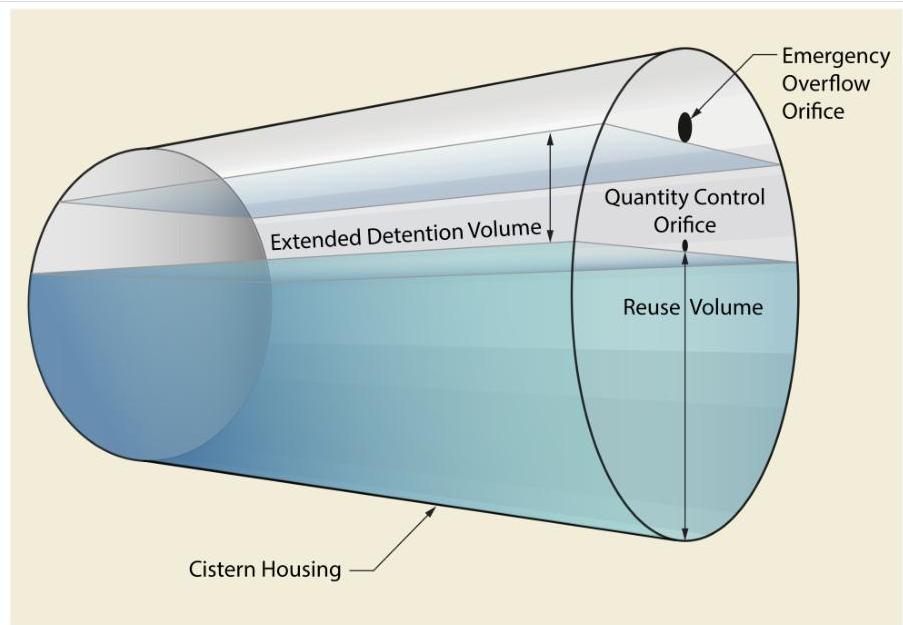
# Subsurface Cistern with Extended Detention

[OCR image]
NOTE:
Maintenance Access and Pump System not shown
Not to Scale

# Designing a Cistern

A cistern stores runoff generated by the WQDS to be reused over the course of three (3) days, following stormwater capture. Therefore, it is necessary to ensure that the cistern stormwater reuse demand at the project site is sufficient to ensure that the cistern is emptied in time for the next rain event. A cistern-a
PDF page 17, image 1
Mistral ID: img-10.jpeg. Extraction bundle(s): 2023_BMP_9_1_Cisterns. Original page | Image file
Surrounding OCR excerpt:
[OCR image]

[OCR image]
PDF page 17, image 2
Mistral ID: img-11.jpeg. Extraction bundle(s): 2023_BMP_9_1_Cisterns. Original page | Image file
Surrounding OCR excerpt:
[OCR image]

[OCR image]