Extracted images: Wet Ponds (Non-GI)
Printed revision: March 2021.
Back to source | Original PDF | Image metadata
Original Mistral crops are preserved byte for byte. A crop can be a figure, table, equation, or other visual; no visual content is inferred as a numerical rule. Record and table associations use the same PDF page unless a direct image placeholder is identified. Nearby OCR excerpts are context, not verified captions.
PDF page 1, image 1
Mistral ID: img-0.jpeg. Extraction bundle(s): 2023_BMP_11_6_Wet_Ponds. Original page | Image file
Tables on the same PDF page: Table 1
Surrounding OCR excerpt:
# 11.6 WET PONDS (NON-GI)

[OCR image]

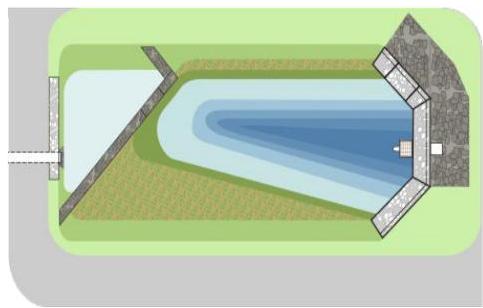
Wet ponds, also known as retention basins, have an elevated outlet structure that creates a permanent pool where stormwater runoff is detained and attenuated. Wet ponds can be designed as multi-stage, multi-function systems; extended detention in the permanent pool provides pollutant treatment for runoff from the Water Quality Design Storm through sedimentation and biological processing; detention and
PDF page 2, image 1
Mistral ID: img-1.jpeg. Extraction bundle(s): 2023_BMP_11_6_Wet_Ponds. Original page | Image file

Surrounding OCR excerpt:
the definition of green infrastructure.

Wet ponds must have a maintenance plan and must be reflected in a deed notice recorded in the county clerk's office to prevent alteration or removal.

# Applications

[OCR image]

Only if a waiver or variance from the green infrastructure requirements of N.J.A.C. 7:8-5.3 is obtained may wet ponds that are designed as an on-line system be used to meet the stormwater runoff quantity requirements. Additionally, regardless of the design storm chosen, wet ponds must be designed for stability in accordance with the Standards for Soil Erosion and Sediment Control in New Jersey, as requ
PDF page 5, image 1
Mistral ID: img-2.jpeg. Extraction bundle(s): 2023_BMP_11_6_Wet_Ponds. Original page | Image file
Surrounding OCR excerpt:
[OCR image]

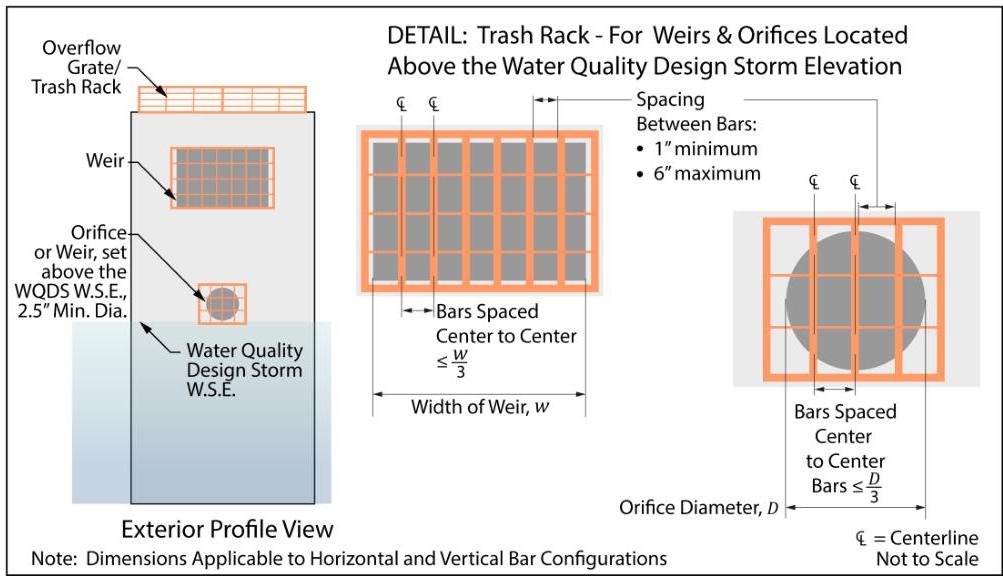
- An overflow grate is designed to prevent obstruction of the overflow structure. If an outlet structure has an overflow grate, the grate must comply with the following requirements:

The overflow grate must be secured to the outlet structure but removable for emergencies and maintenance;
The overflow grate spacing must be no greater than 2 inches across the smallest dimension; and
The overflow grate m
PDF page 5, image 2
Mistral ID: img-3.jpeg. Extraction bundle(s): 2023_BMP_11_6_Wet_Ponds. Original page | Image file
Surrounding OCR excerpt:
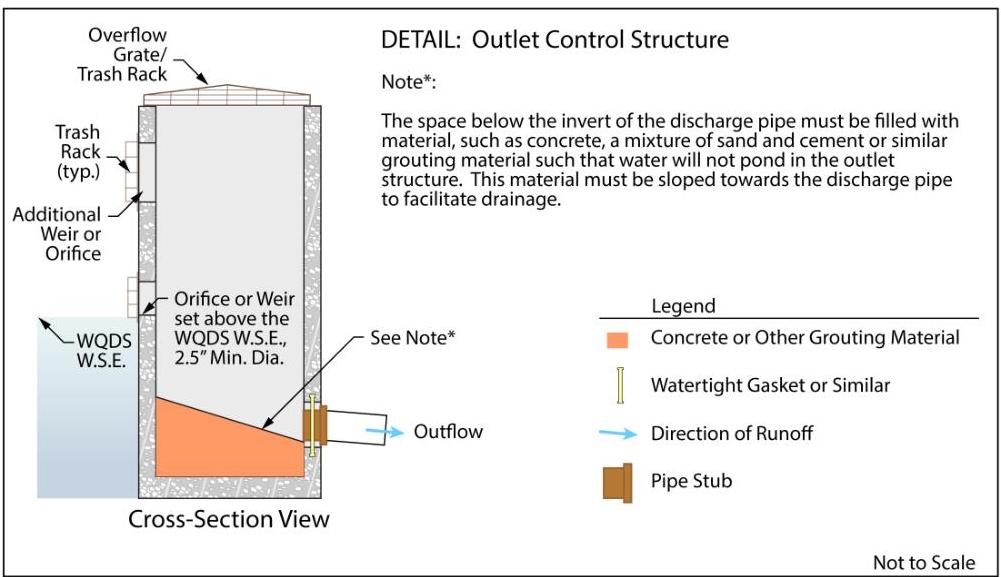
and cement, or similar grouting material, such that water will not pond in the outlet structure. This material must be sloped towards the discharge pipe to facilitate drainage, as shown in the detail below.

[OCR image]
PDF page 7, image 1
Mistral ID: img-4.jpeg. Extraction bundle(s): 2023_BMP_11_6_Wet_Ponds. Original page | Image file
Surrounding OCR excerpt:
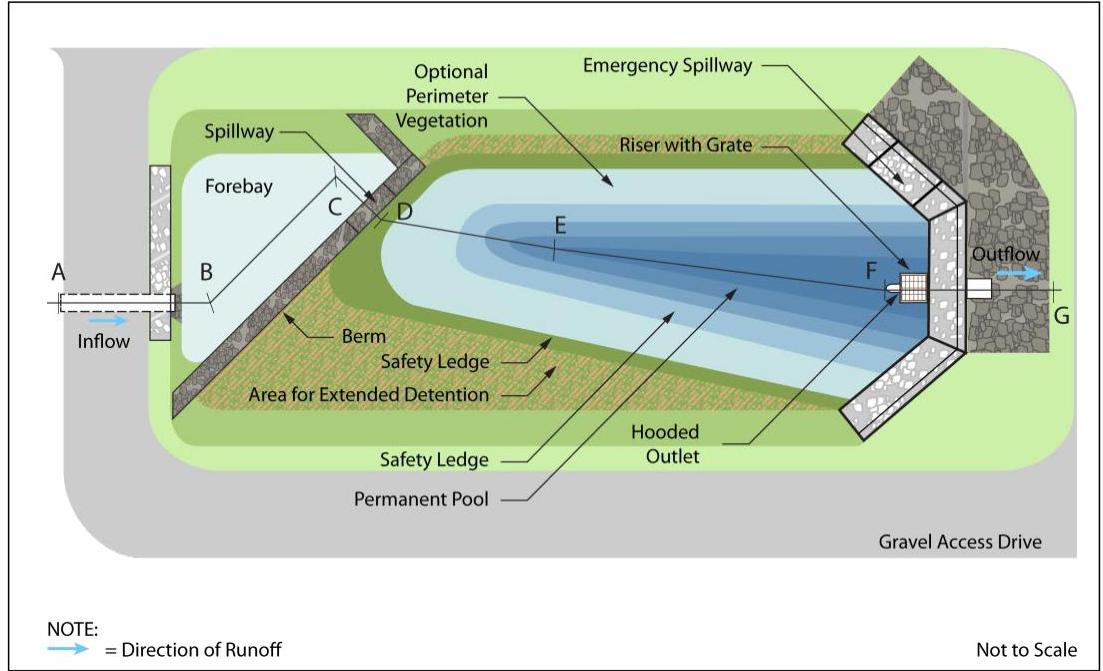
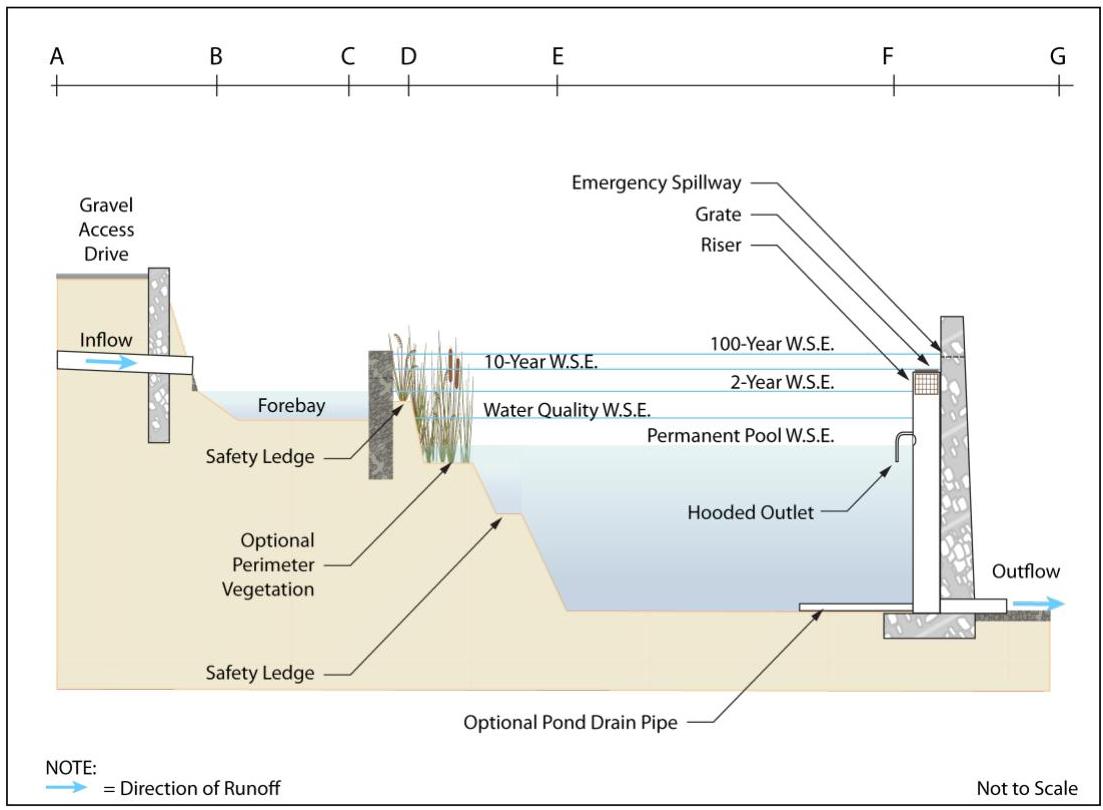
ents comprising a wet pond in both plan and profile view. The lettered path shown in the plan view represents the alignment along which an imaginary slice was made to prepare the corresponding profile view.

[OCR image]
PDF page 8, image 1
Mistral ID: img-5.jpeg. Extraction bundle(s): 2023_BMP_11_6_Wet_Ponds. Original page | Image file
Surrounding OCR excerpt:
# Wet Pond - Profile View

W.S.E. = Water Surface Elevation

[OCR image]

# TSS Removal Rates for Wet Ponds

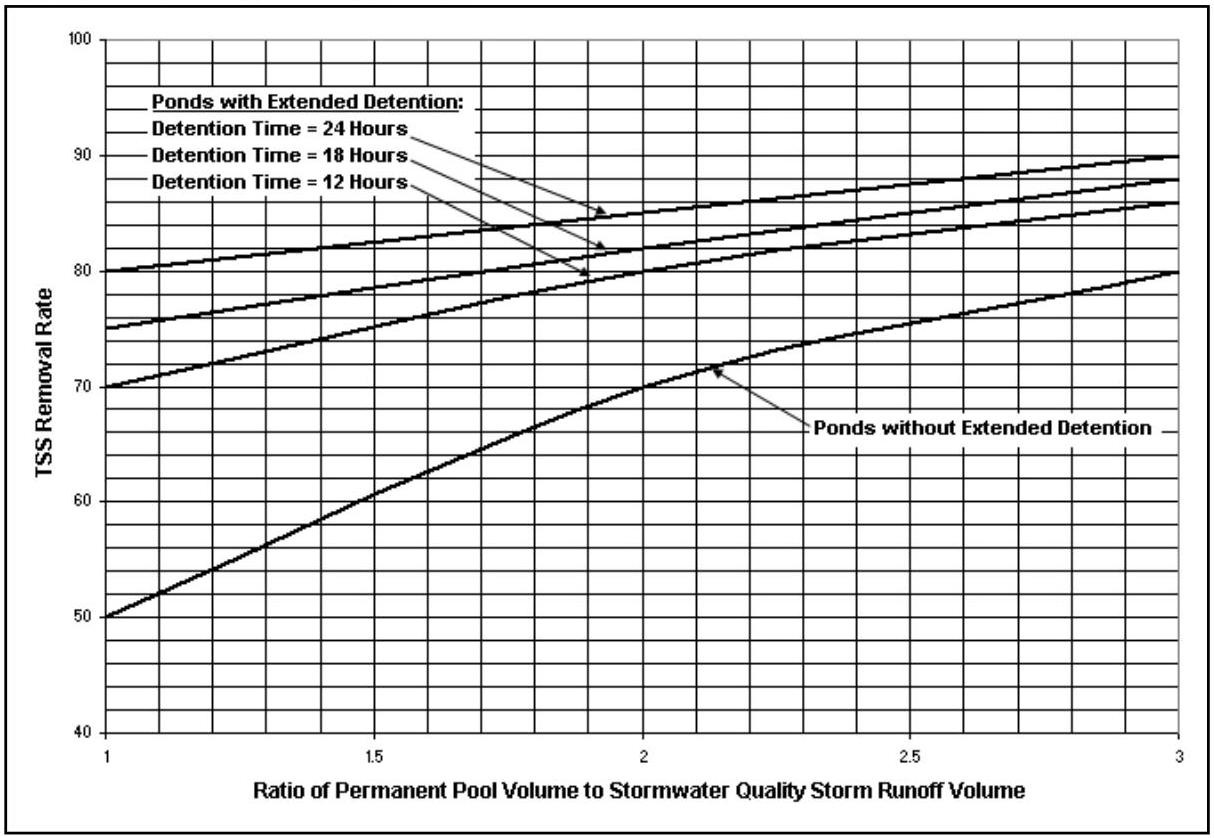
Wet ponds may receive credit for pollutant removal only if a waiver or variance form the green infrastructure requirements of N.J.A.C. 7:8-5.3 is obtained. Wet ponds must be designed to treat the volume generated by the Water Quality Design Storm (WQDS) to merit the approved TSS removal rate specified in Table 5-3 at N.J.A.C. 7:8-5.2(f). Techniques to compute this vol
PDF page 9, image 1
Mistral ID: img-6.jpeg. Extraction bundle(s): 2023_BMP_11_6_Wet_Ponds. Original page | Image file
Tables on the same PDF page: Table 2 | Table 3
Surrounding OCR excerpt:
[OCR image]
TSS Removal Rates for Wet Ponds

The following example illustrates how to use the chart to determine the TSS removal rate provided.

Example: A number of wet pond designs are to be evaluated for TSS removal rates.

|  Design Number | Permanent Pool Volume (ac-ft) | WQ Runoff Volume | Extended Detention Period |   |   | Ratio of Permanent Pool to WQ Runoff | % TSS Removal  |
| --- | --- | --- | --- | ---
PDF page 10, image 1
Mistral ID: img-7.jpeg. Extraction bundle(s): 2023_BMP_11_6_Wet_Ponds. Original page | Image file
Surrounding OCR excerpt:
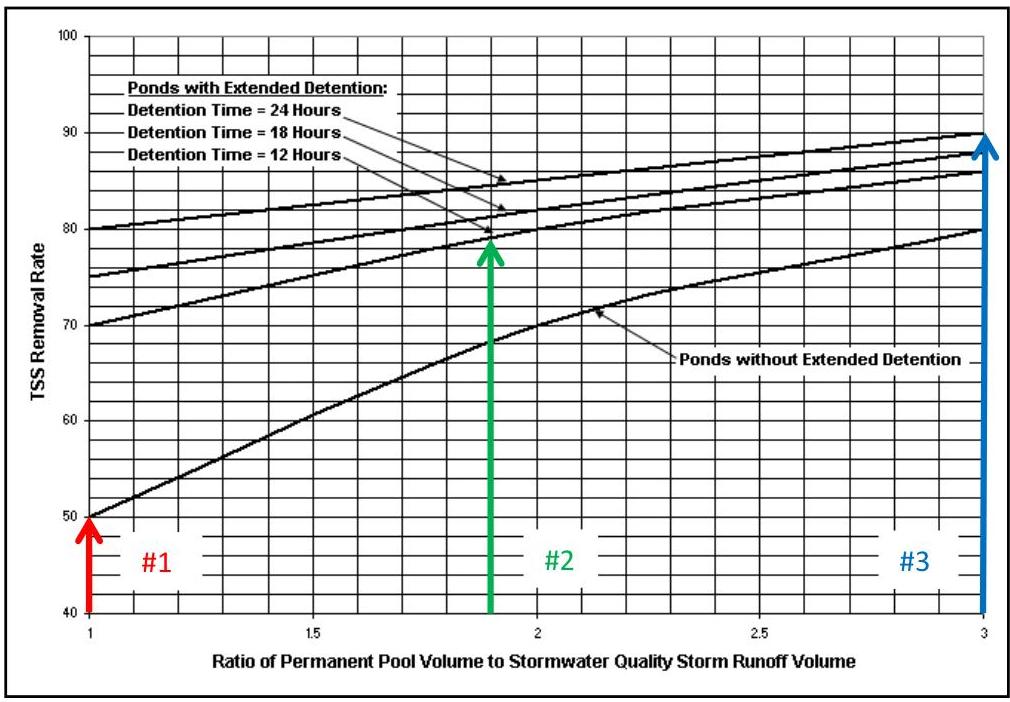
ides. Design #1 provides no extended detention; therefore, the lowest curve is used to determine the TSS removal rate. Designs #2 and 3 provide extended detention and therefore, use the upper set of curves.

[OCR image]

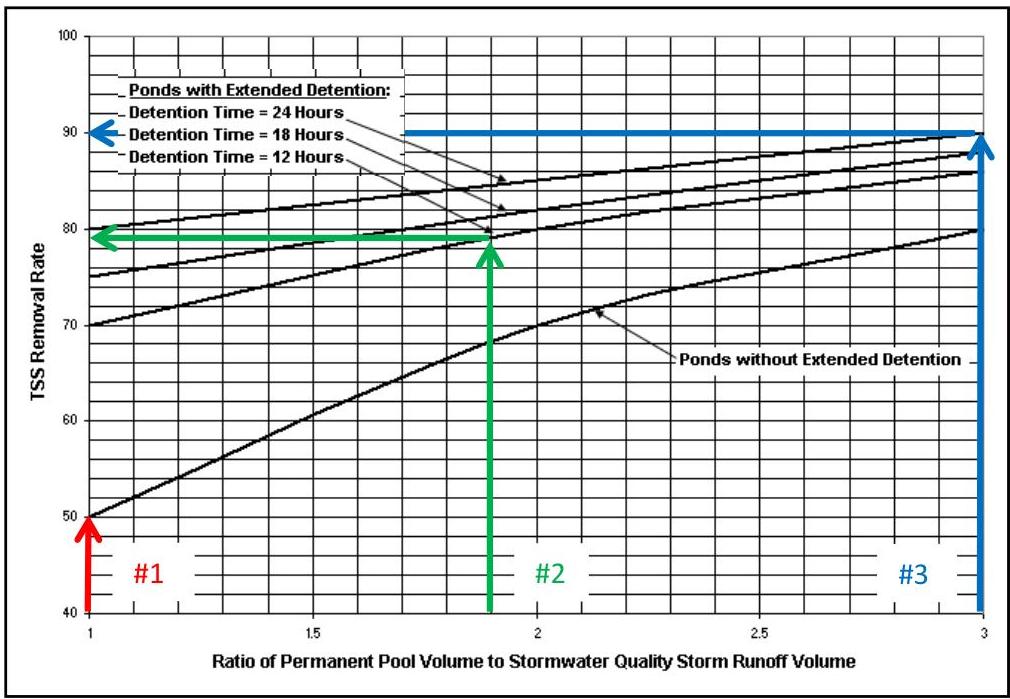
Step 3: For each of the designs, at the intersection of the vertical line from Step 2 with the respective curve, draw a horizontal line from right to left over to the y-axis to get the TSS removal rate.

[OCR image]
PDF page 10, image 2
Mistral ID: img-8.jpeg. Extraction bundle(s): 2023_BMP_11_6_Wet_Ponds. Original page | Image file
Surrounding OCR excerpt:
g)

Step 3: For each of the designs, at the intersection of the vertical line from Step 2 with the respective curve, draw a horizontal line from right to left over to the y-axis to get the TSS removal rate.

[OCR image]