Extracted images: Stormwater Pollutant Removal Criteria
Printed revision: January 2026.
Back to source | Original PDF | Image metadata
Original Mistral crops are preserved byte for byte. A crop can be a figure, table, equation, or other visual; no visual content is inferred as a numerical rule. Record and table associations use the same PDF page unless a direct image placeholder is identified. Nearby OCR excerpts are context, not verified captions.
PDF page 1, image 1
Mistral ID: img-0.jpeg. Extraction bundle(s): 2026_BMP_4_Stormwater_Pollutant_Removal_Criteria. Original page | Image file

Surrounding OCR excerpt:
# 4. STORMWATER POLLUTANT REMOVAL CRITERIA

[OCR image]

This chapter presents the criteria and methodologies necessary to determine the pollutant removal rates of stormwater management measures used individually and in series to meet the stormwater runoff quality requirements of the Stormwater Management rules at N.J.A.C. 7:8 (the "rules"). According to these rules, stormwater runoff quality standards are applicable when a major development results in an in
PDF page 8, image 1
Mistral ID: img-1.jpeg. Extraction bundle(s): 2026_BMP_4_Stormwater_Pollutant_Removal_Criteria. Original page | Image file
Surrounding OCR excerpt:
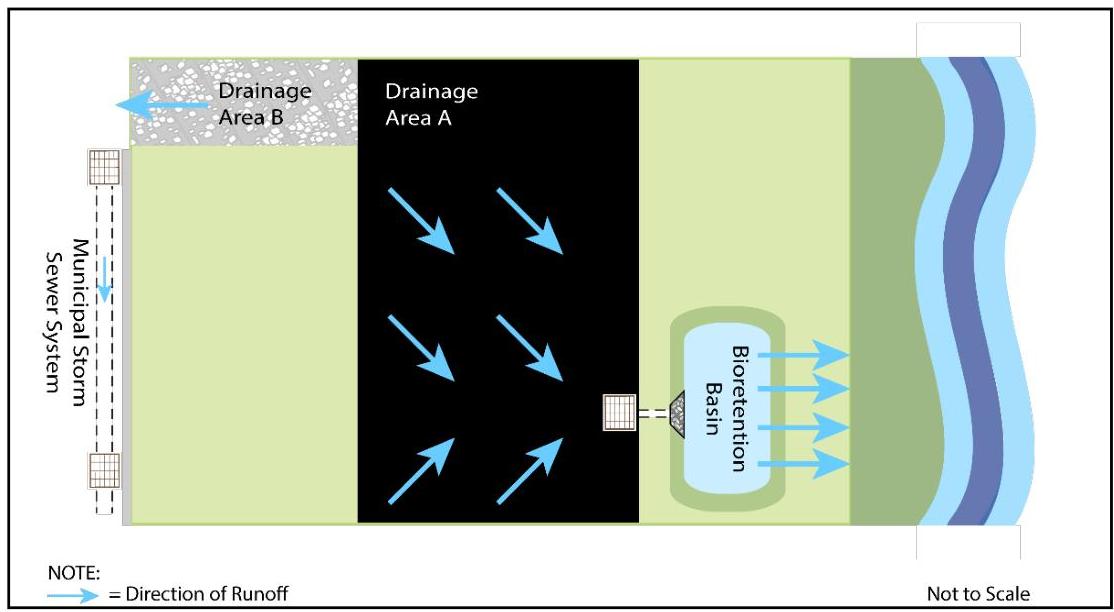
ewer system. No treatment is proposed for the stormwater runoff from Drainage Area B. Can the 90% TSS removal rate of the TSS load for Drainage Area A be averaged with untreated runoff from Drainage Area B?

[OCR image]

The answer is no. Stormwater runoff from Drainage Areas A and B does not converge before leaving the site. The 90% TSS removal rate for Drainage Area A cannot be averaged with the 0% TSS removal rate of Drainage Area B. Therefore, the untreated stormwater runoff from Drainage Area B does not meet the stormwater runoff quality standards, and therefore the proposed development does not meet the stormwate
PDF page 9, image 1
Mistral ID: img-2.jpeg. Extraction bundle(s): 2026_BMP_4_Stormwater_Pollutant_Removal_Criteria. Original page | Image file
Surrounding OCR excerpt:
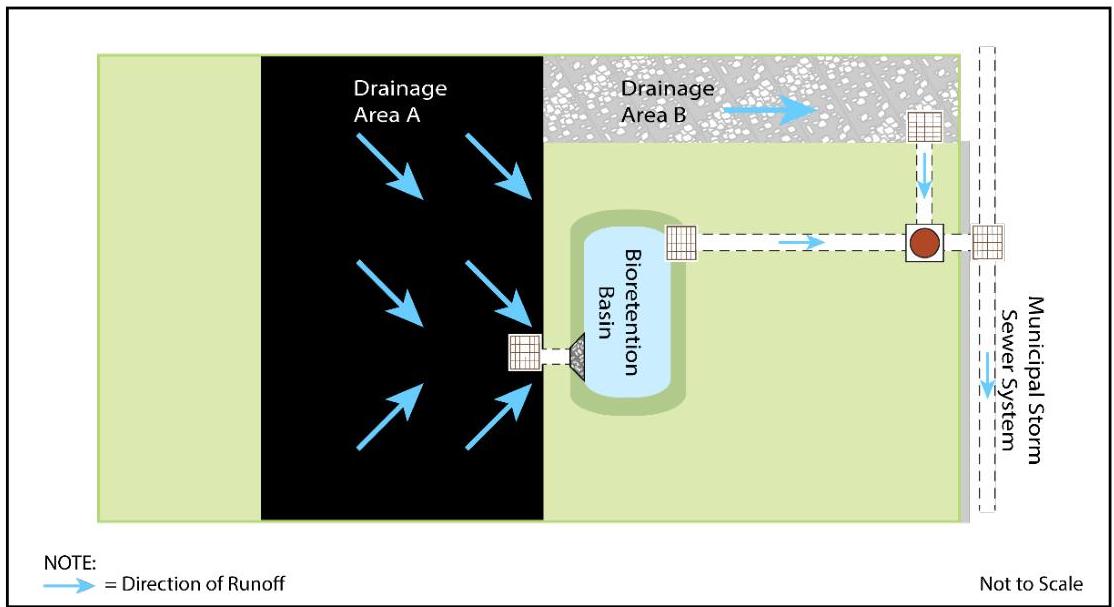
pal storm sewer system. No treatment is proposed for the runoff from Drainage Area B. Can the 90% removal rate of the TSS load for Drainage Area A be averaged with the untreated runoff from Drainage Area B?

[OCR image]

The answer is yes. The runoff from Drainage Areas A and B converge at the onsite manhole before the discharge of stormwater runoff leaves the site. The 90% TSS removal rate for Drainage Area A runoff can be averaged with the 0% TSS removal rate for Drainage Area B runoff.

In this example, stormwater runoff from the site's motor vehicle surfaces subject to the stormwater runoff quality standards is:

-