Extracted images: Vegetative Filter Strips (Small-Scale GI)
Printed revision: January 2026.
Back to source | Original PDF | Image metadata
Original Mistral crops are preserved byte for byte. A crop can be a figure, table, equation, or other visual; no visual content is inferred as a numerical rule. Record and table associations use the same PDF page unless a direct image placeholder is identified. Nearby OCR excerpts are context, not verified captions.
PDF page 1, image 1
Mistral ID: img-0.jpeg. Extraction bundle(s): 2026_BMP_9_10_Vegetative_Filter_Strips. Original page | Image file
Tables on the same PDF page: Table 1
Surrounding OCR excerpt:
# 9.10 VEGETATIVE FILTER STRIPS

[OCR image]

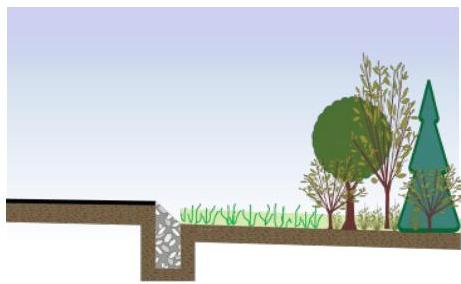
A vegetative filter strip is a stable, evenly graded area that removes pollutants from stormwater runoff through filtration and biological uptake. In order to provide pollutant treatment, runoff must enter and move through the filter strip as sheet flow; therefore, vegetative filter strips must have shallow enough slopes to maintain this flow condition. When designed in accordance with this chapter, th
PDF page 2, image 1
Mistral ID: img-1.jpeg. Extraction bundle(s): 2026_BMP_9_10_Vegetative_Filter_Strips. Original page | Image file

Tables on the same PDF page: Table 2
Surrounding OCR excerpt:
robust plant community.

Vegetative filter strips must have a maintenance plan and must be reflected in a deed notice recorded in the county clerk's office to prevent alteration or removal.

# Applications

[OCR image]

Pursuant to N.J.A.C. 7:8-5.2(a)(2), the minimum design and performance standards for groundwater recharge, stormwater runoff quality and stormwater runoff quantity at N.J.A.C. 7:8-5.4, 5.5 and 5.6 shall be met by incorporating green infrastructure in accordance with N.J.A.C. 7:8-5.3.

To receive credit for the approved 60-80% total suspended solids (TSS) removal rate, vegetative filter strips must be d
PDF page 6, image 1
Mistral ID: img-2.jpeg. Extraction bundle(s): 2026_BMP_9_10_Vegetative_Filter_Strips. Original page | Image file
Surrounding OCR excerpt:
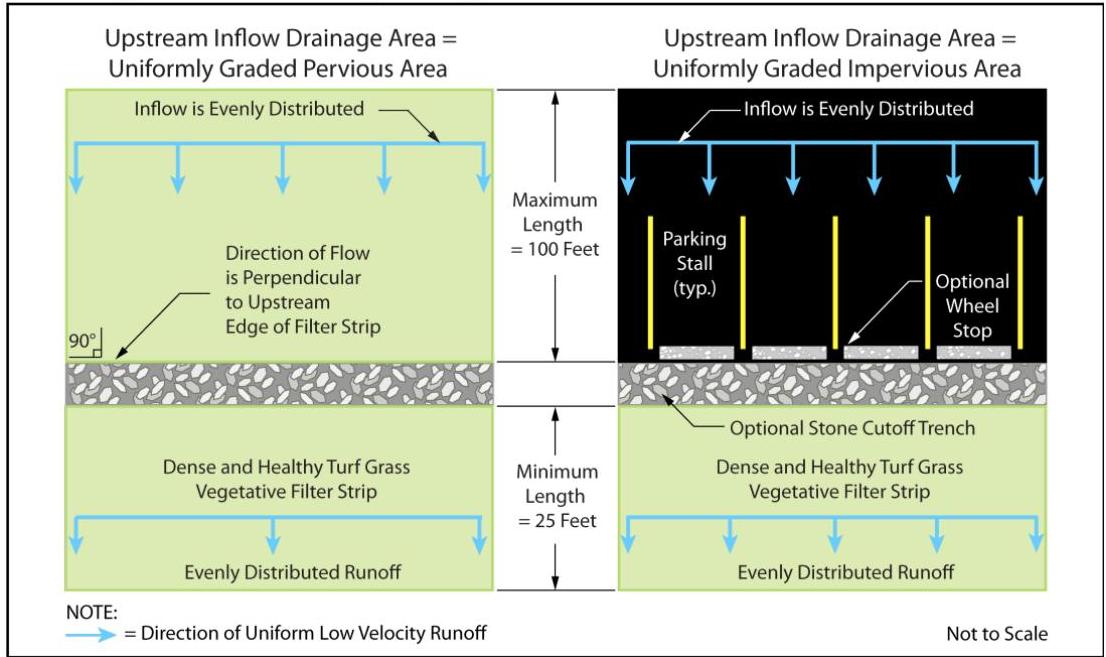
, is employed. The figure below also shows the vegetated filter strip at its minimum required length of 25 feet. In this chapter, length is always measured in the direction of the flow of stormwater runoff.

[OCR image]
PDF page 7, image 1
Mistral ID: img-3.jpeg. Extraction bundle(s): 2026_BMP_9_10_Vegetative_Filter_Strips. Original page | Image file
Surrounding OCR excerpt:
# Filter Strips with More Than One Type of Vegetation

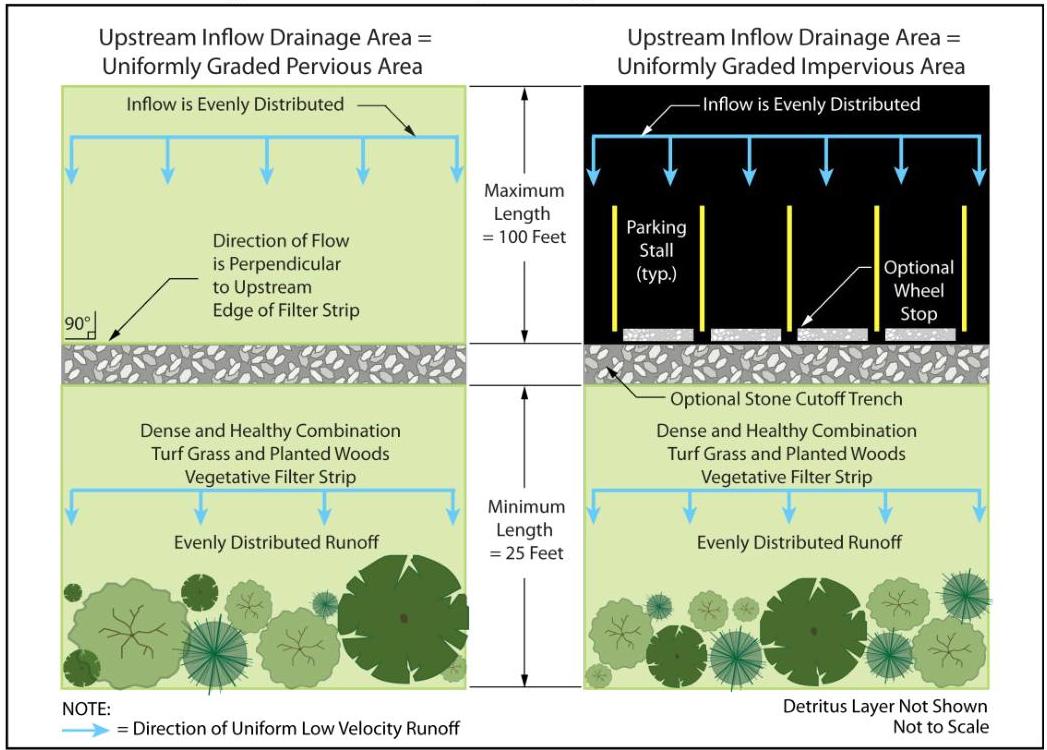
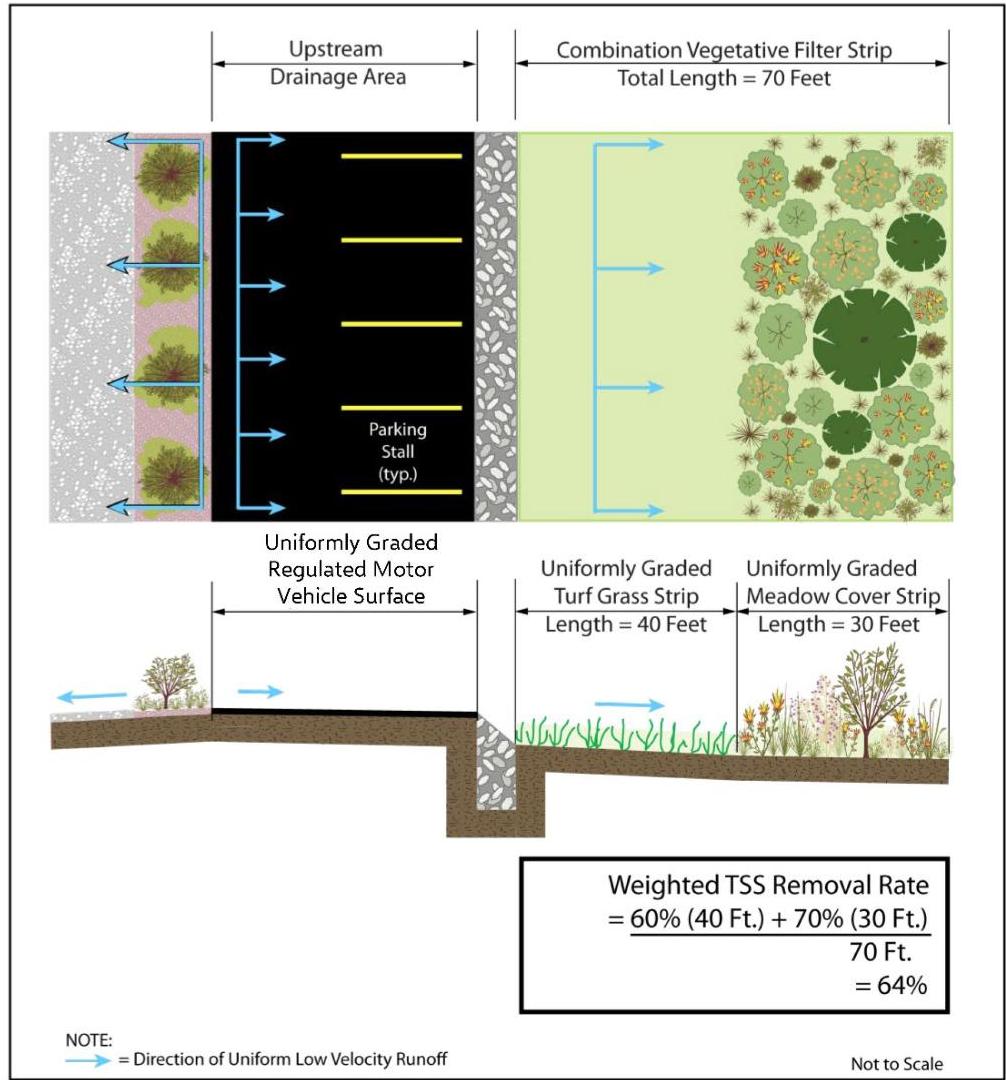
The following illustration shows the same filter strip configurations as above with two different types of vegetation.

[OCR image]
Combination Vegetative Filter Strip Configuration – Plan View

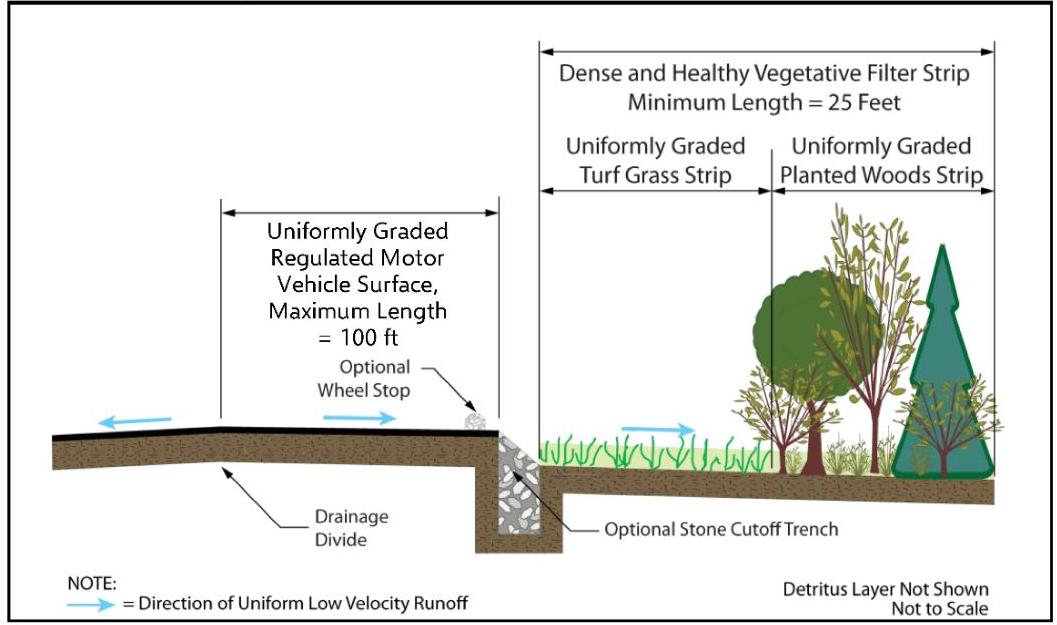
The next graphic illustrates a combination vegetative filter strip in profile view. This view highlights the restriction against allowing additional flow to enter at the upstream limit of the contributory drainage area. Again, the contributory drainage area has a maximum length of 100 feet and the filter strip has a minimum length of 25 feet
PDF page 7, image 2
Mistral ID: img-4.jpeg. Extraction bundle(s): 2026_BMP_9_10_Vegetative_Filter_Strips. Original page | Image file
Surrounding OCR excerpt:
tributory drainage area has a maximum length of 100 feet and the filter strip has a minimum length of 25 feet. The use of wheel stops or other parking guides must not impede sheet flow of stormwater runoff.

[OCR image]
Combination Vegetative Filter Strip Configuration – Profile View
PDF page 8, image 1
Mistral ID: img-5.jpeg. Extraction bundle(s): 2026_BMP_9_10_Vegetative_Filter_Strips. Original page | Image file
Surrounding OCR excerpt:
TSS)_i \times L_i \right]}{\sum_{i=1}^{n} L_i},
$$

where $n$ is the number of sections, $(\% TSS)_i$ is the TSS removal rate of an individual section, and $L_i$ is the corresponding length of that section.

[OCR image]
PDF page 9, image 1
Mistral ID: img-6.jpeg. Extraction bundle(s): 2026_BMP_9_10_Vegetative_Filter_Strips. Original page | Image file
Surrounding OCR excerpt:
e used for a particular soil type is found in the next section, which begins on Page 12.

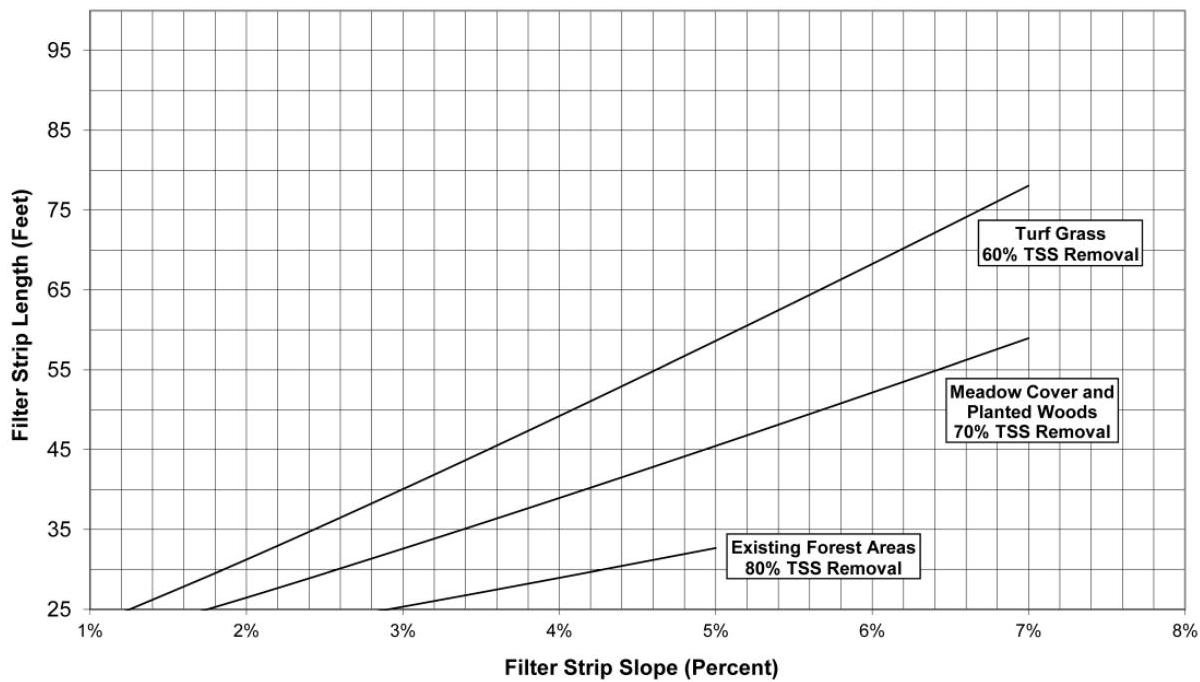
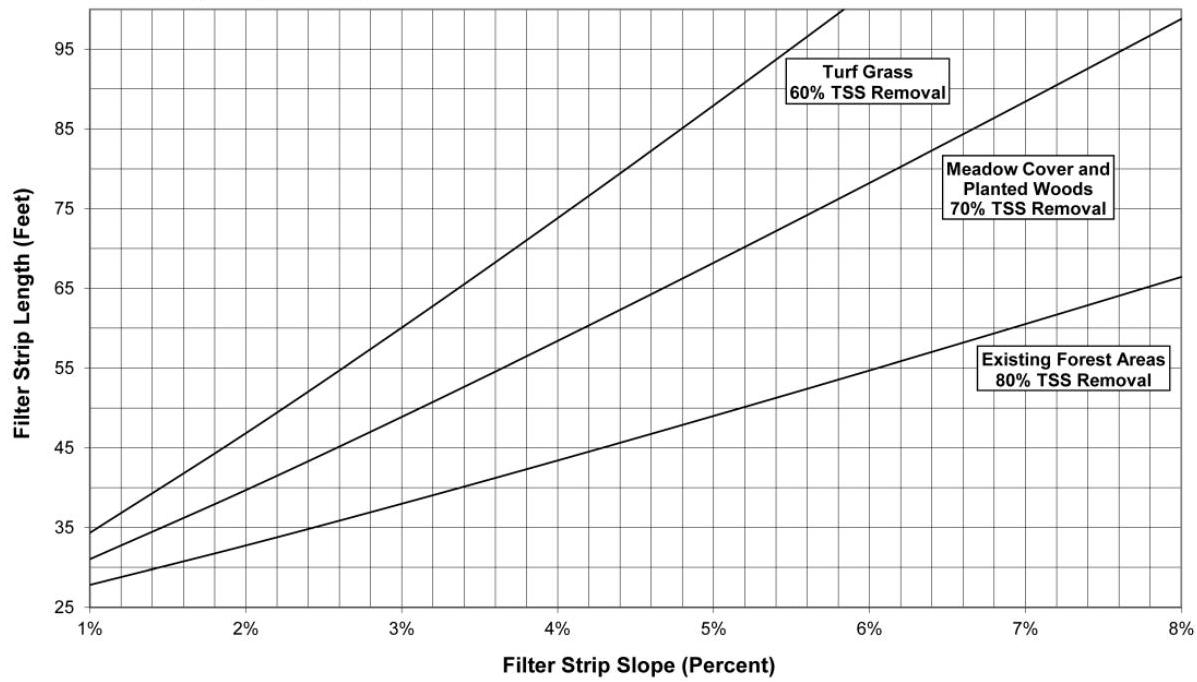
Chart A. Vegetative Filter Strip Length:
Contributory Drainage Area – Hydrologic Soil Group A & Soil Type = Sand

[OCR image]

Charts B through E are continued on the following two pages.
PDF page 10, image 1
Mistral ID: img-7.jpeg. Extraction bundle(s): 2026_BMP_9_10_Vegetative_Filter_Strips. Original page | Image file
Surrounding OCR excerpt:
[OCR image]
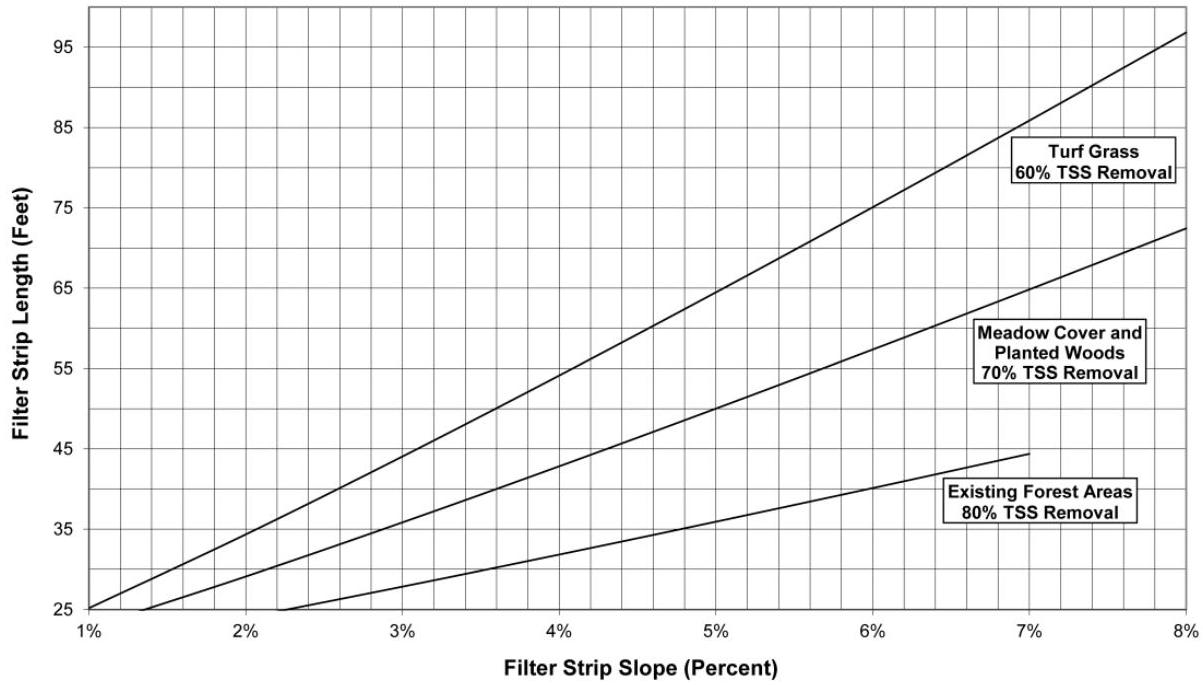
Chart B. Vegetative Filter Strip Length:
Contributory Drainage Area – Hydrologic Soil Group A & Soil Type = Sandy Loam

[OCR image]
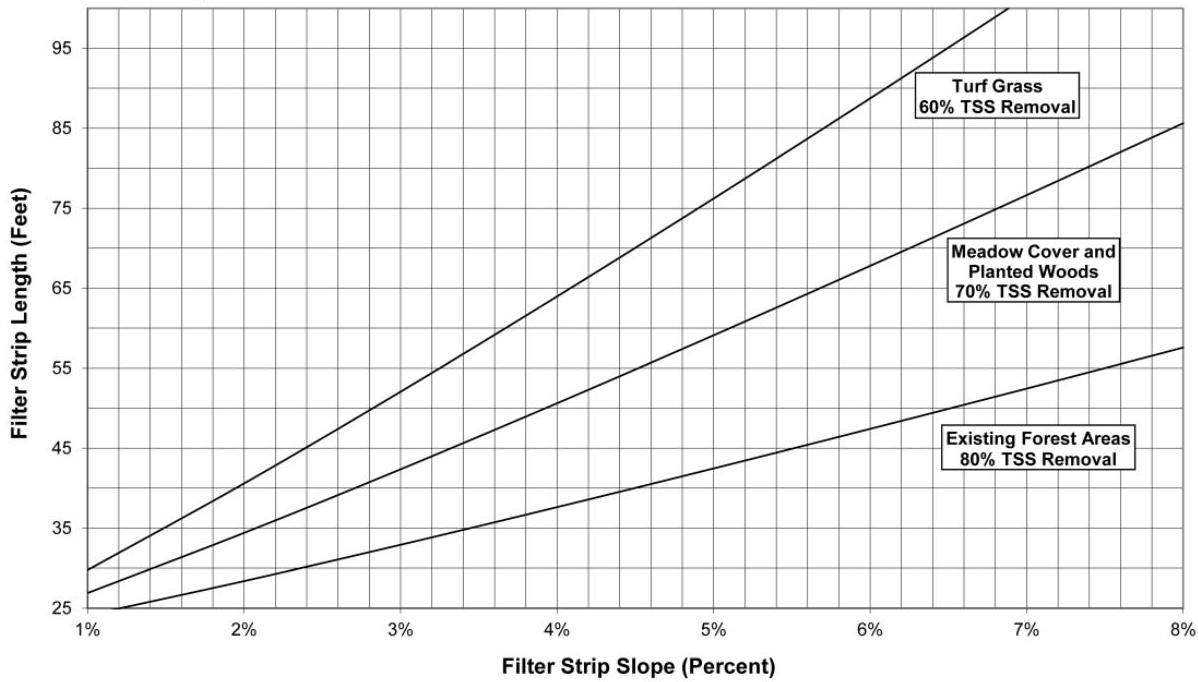
Chart C. Vegetative Filter Strip Length:
Contributory Drainage Area – Hydrologic Soil Group B & Soil Type = Loam, Silt Loam
PDF page 10, image 2
Mistral ID: img-8.jpeg. Extraction bundle(s): 2026_BMP_9_10_Vegetative_Filter_Strips. Original page | Image file
Surrounding OCR excerpt:
[OCR image]
Chart B. Vegetative Filter Strip Length:
Contributory Drainage Area – Hydrologic Soil Group A & Soil Type = Sandy Loam

[OCR image]
Chart C. Vegetative Filter Strip Length:
Contributory Drainage Area – Hydrologic Soil Group B & Soil Type = Loam, Silt Loam
PDF page 11, image 1
Mistral ID: img-9.jpeg. Extraction bundle(s): 2026_BMP_9_10_Vegetative_Filter_Strips. Original page | Image file
Surrounding OCR excerpt:
[OCR image]
Chart D. Vegetative Filter Strip Length:
Contributory Drainage Area – Hydrologic Soil Group C & Soil Type = Sandy Clay Loam

[OCR image]
Chart E. Vegetative Filter Strip Length:
Contributory Drainage Area – Hydrologic Soil Group D & Soil Type = Clay Loam, Silty Clay, Clay
PDF page 11, image 2
Mistral ID: img-10.jpeg. Extraction bundle(s): 2026_BMP_9_10_Vegetative_Filter_Strips. Original page | Image file
Surrounding OCR excerpt:
[OCR image]
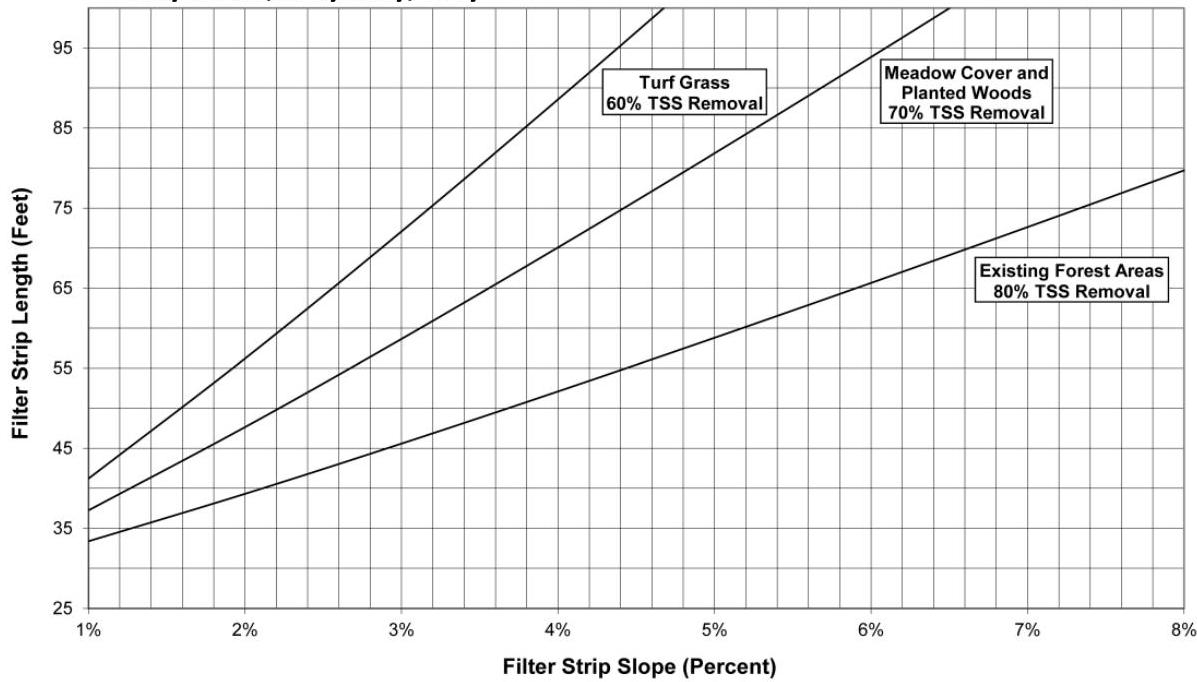
Chart D. Vegetative Filter Strip Length:
Contributory Drainage Area – Hydrologic Soil Group C & Soil Type = Sandy Clay Loam

[OCR image]
Chart E. Vegetative Filter Strip Length:
Contributory Drainage Area – Hydrologic Soil Group D & Soil Type = Clay Loam, Silty Clay, Clay
PDF page 13, image 1
Mistral ID: img-11.jpeg. Extraction bundle(s): 2026_BMP_9_10_Vegetative_Filter_Strips. Original page | Image file
Surrounding OCR excerpt:
the Table on Page 10, is 8%. The proposed slope is less than the maximum allowable.

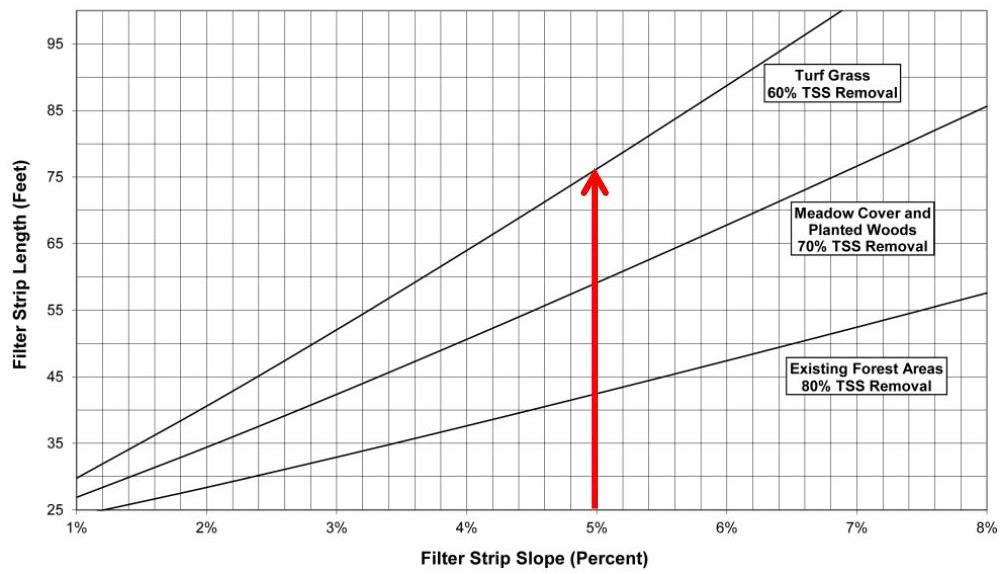
Step 5: Using Chart C, draw a vertical line on the slope axis at the 5% mark up to the curve for turf grass, as follows:

[OCR image]

Step 6: Draw a 2nd line from the point of intersection with the turf grass curve over to the filter strip length axis, as follows:

[OCR image]

Step 7: Determine the required length of the filter strip. The answer is approximately 76 feet.

Answer: If constructed in accordance with this chapter, a turf grass vegetative filter strip 76 feet in length at 5% slope will be awarded a TSS r
PDF page 13, image 2
Mistral ID: img-12.jpeg. Extraction bundle(s): 2026_BMP_9_10_Vegetative_Filter_Strips. Original page | Image file
Surrounding OCR excerpt:
up to the curve for turf grass, as follows:

[OCR image]

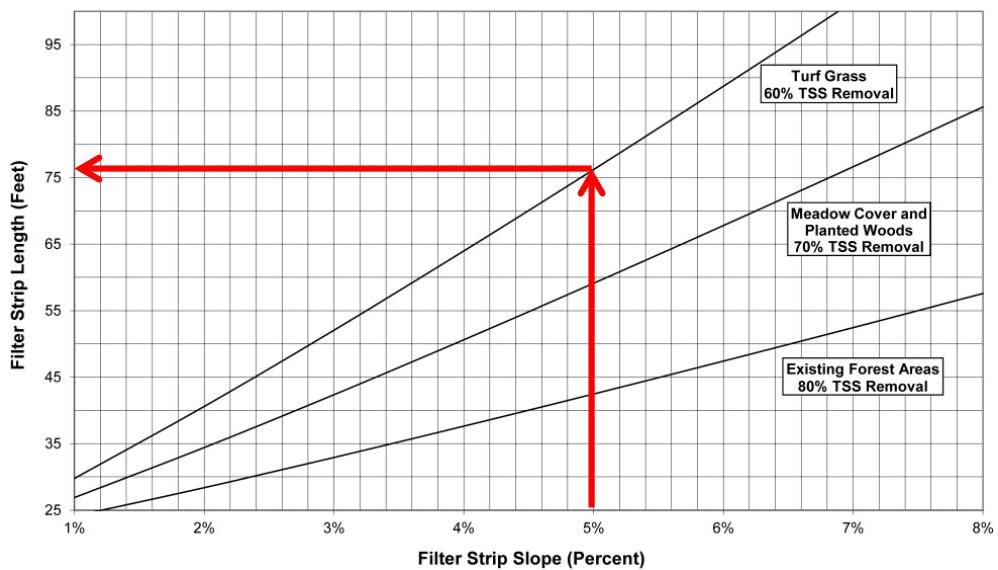
Step 6: Draw a 2nd line from the point of intersection with the turf grass curve over to the filter strip length axis, as follows:

[OCR image]

Step 7: Determine the required length of the filter strip. The answer is approximately 76 feet.

Answer: If constructed in accordance with this chapter, a turf grass vegetative filter strip 76 feet in length at 5% slope will be awarded a TSS removal rate of 60%.
PDF page 14, image 1
Mistral ID: img-13.jpeg. Extraction bundle(s): 2026_BMP_9_10_Vegetative_Filter_Strips. Original page | Image file
Surrounding OCR excerpt:
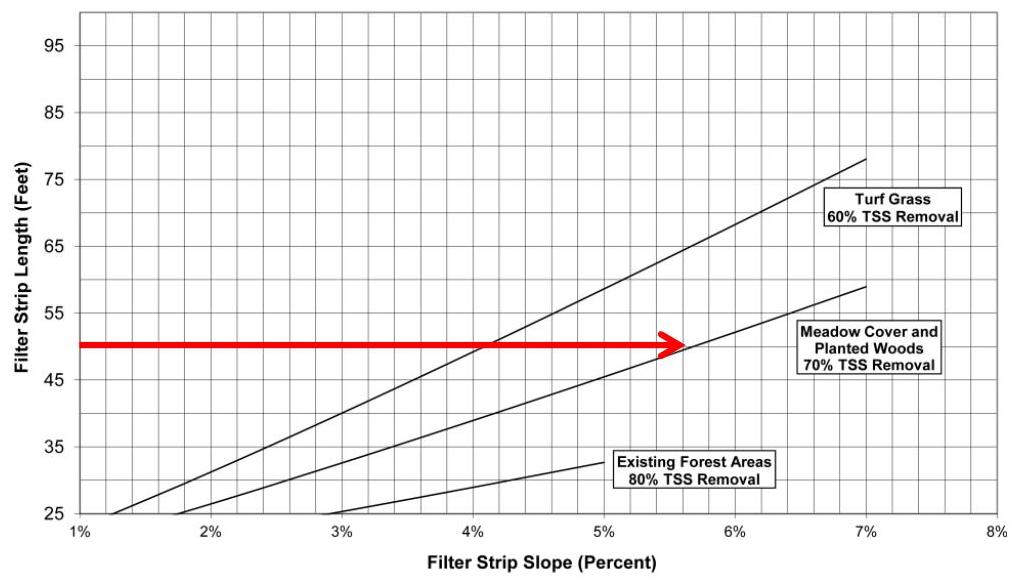
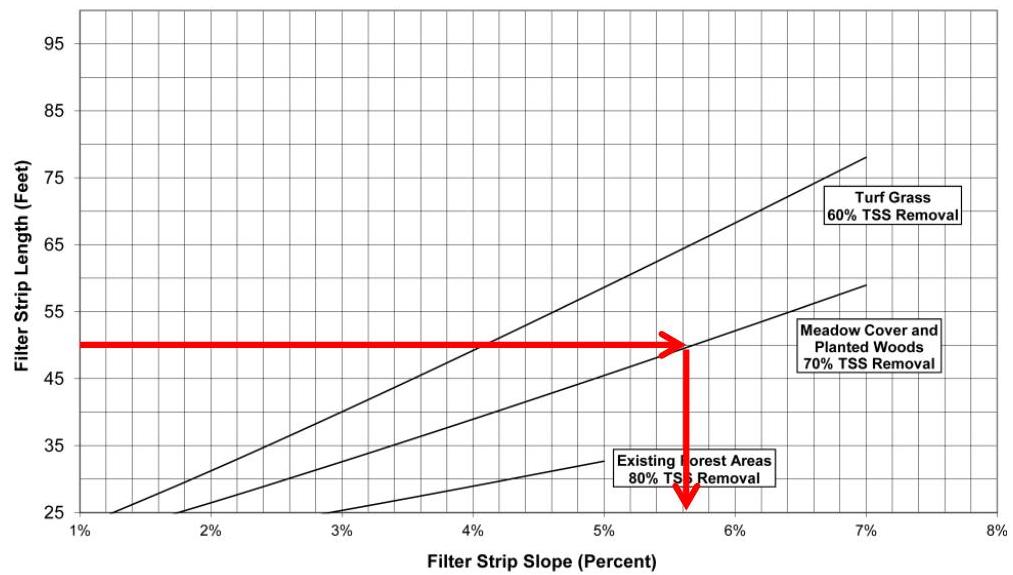
meadow cover filter strip 50 feet in length is proposed. What slope is required?

Step 1: Using Chart A, a horizontal line is drawn from the vertical axis at the 50 ft mark over to the meadow cover curve.

[OCR image]

Step 2: A vertical line is then drawn down from the intersection of the line in Step 1 with the meadow cover curve to the horizontal axis.

[OCR image]
PDF page 14, image 2
Mistral ID: img-14.jpeg. Extraction bundle(s): 2026_BMP_9_10_Vegetative_Filter_Strips. Original page | Image file
Surrounding OCR excerpt:
mark over to the meadow cover curve.

[OCR image]

Step 2: A vertical line is then drawn down from the intersection of the line in Step 1 with the meadow cover curve to the horizontal axis.

[OCR image]
PDF page 16, image 1
Mistral ID: img-15.jpeg. Extraction bundle(s): 2026_BMP_9_10_Vegetative_Filter_Strips. Original page | Image file
Surrounding OCR excerpt:
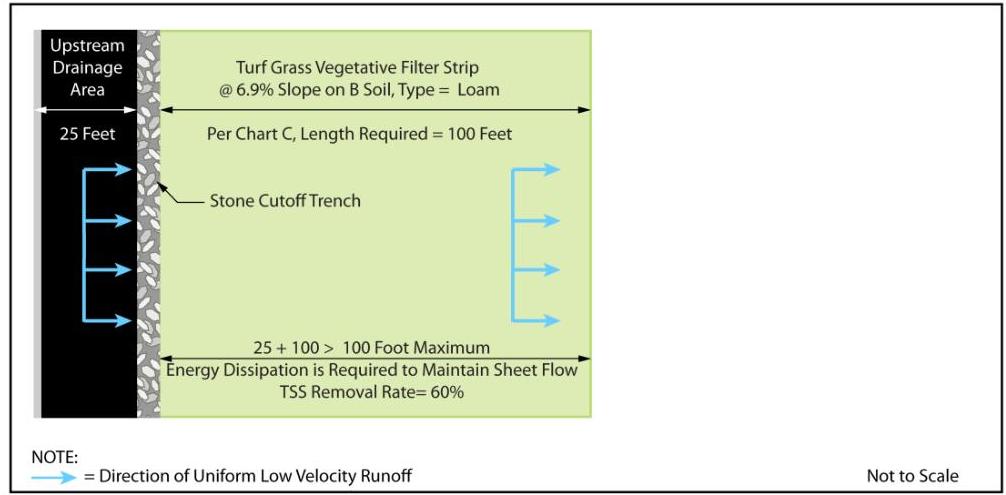
Example 4a: Filter Strip Requirements - Turf grass at 6.9% Slope, on HSG B, Soil type = Loam

[OCR image]

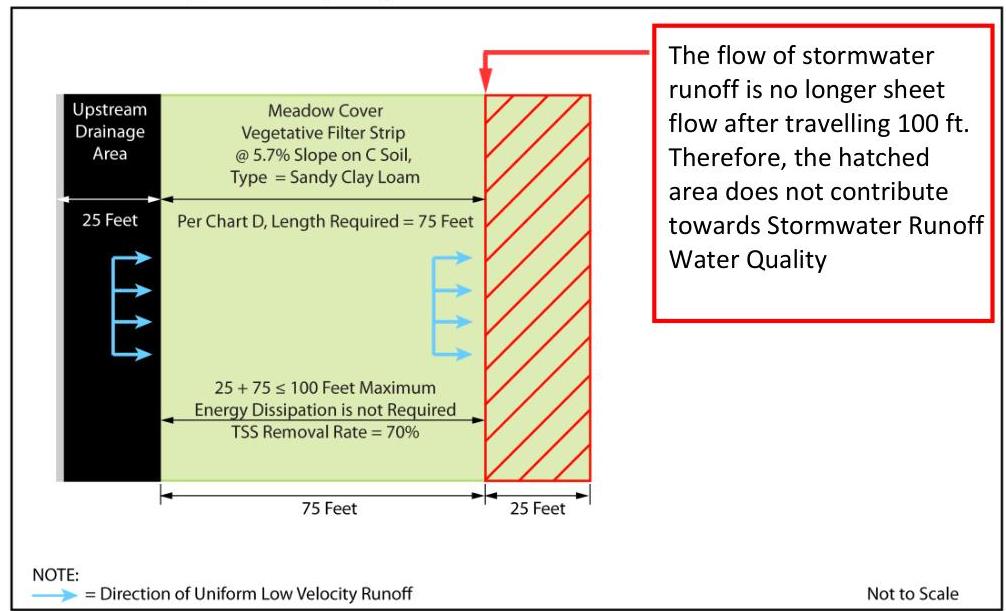
b. From Step 1, the required length of the filter strip is 75 feet, as shown in the following illustration. Because the length of the contributory drainage area plus the length of the filter strip is 100 feet, a stone cutoff trench is not necessary, and the contributory drainage area receives the 70% TSS removal rate. The downstream section hatched in red does not contribute to stormwater runoff quali
PDF page 16, image 2
Mistral ID: img-16.jpeg. Extraction bundle(s): 2026_BMP_9_10_Vegetative_Filter_Strips. Original page | Image file
Surrounding OCR excerpt:
ff quality because the distance of travel exceeds the 100 foot maximum established for sheet flow.

Example 4b: Filter Strip Requirements – Meadow cover at 5.7% Slope, on HSG C, Soil type = Sandy Clay Loam

[OCR image]
PDF page 17, image 1
Mistral ID: img-17.jpeg. Extraction bundle(s): 2026_BMP_9_10_Vegetative_Filter_Strips. Original page | Image file
Surrounding OCR excerpt:
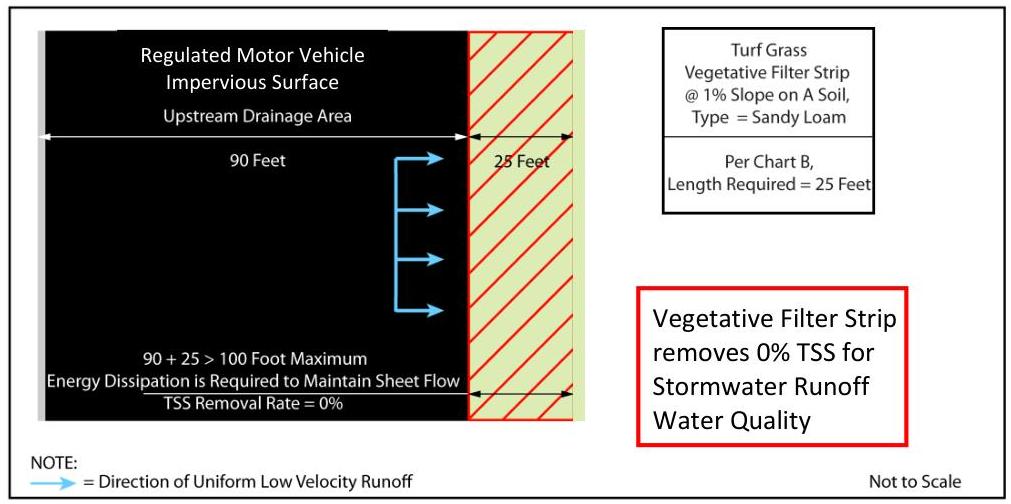
paths in the contributory drainage area and the vegetative filter strip (90 + 25 = 115) exceeds 100 feet; therefore, sheet flow is not maintained, and the resulting TSS removal rate for this design is 0%.

[OCR image]

Note: The following alternative does provide treatment for stormwater runoff quality.

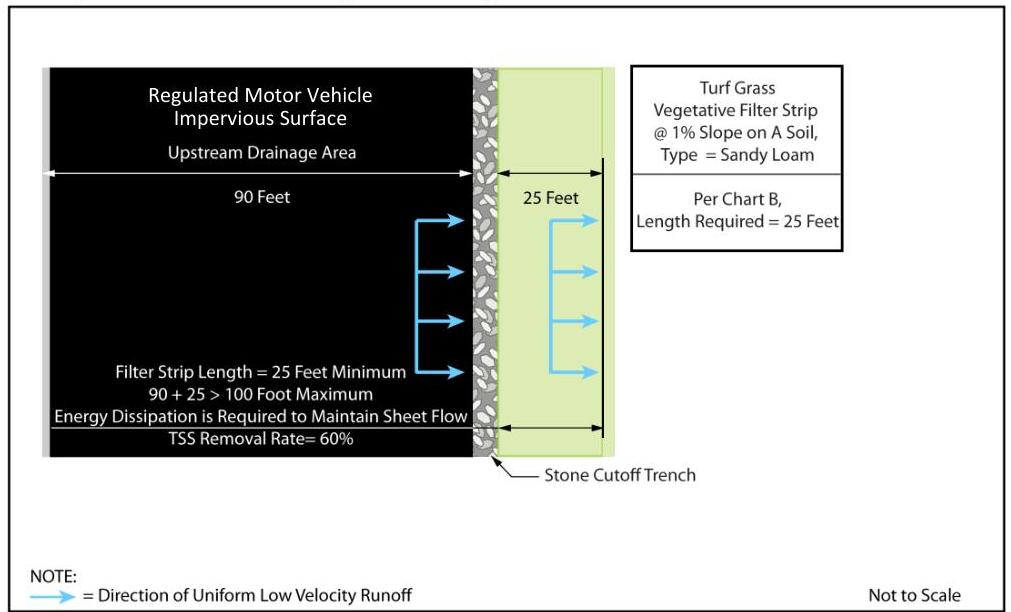
The illustration on the following page shows an identical contributory drainage area and vegetative filter strip. The addition of the stone cutoff trench at the down-gradient boundary of the regulated motor vehicle surface allows sheet flow to be maintained; therefore, the TSS removal rate for this configuration is
PDF page 18, image 1
Mistral ID: img-18.jpeg. Extraction bundle(s): 2026_BMP_9_10_Vegetative_Filter_Strips. Original page | Image file
Surrounding OCR excerpt:
Example 5: Alternate Design Providing 60% TSS Removal

[OCR image]

## Considerations

A number of factors should be considered when using a vegetative filter strip to treat stormwater runoff, including drainage and existing on-site features. Good drainage, both surface and subsurface, is necessary to ensure satisfactory performance. When designing a newly created filter strip, the designer should be aware of potential ponding factors during the planning stage and des